

Ensuring a Safe and Merry Christmas: The Role of HACCP in Holiday Food Safety Training

HACCP Auditor course
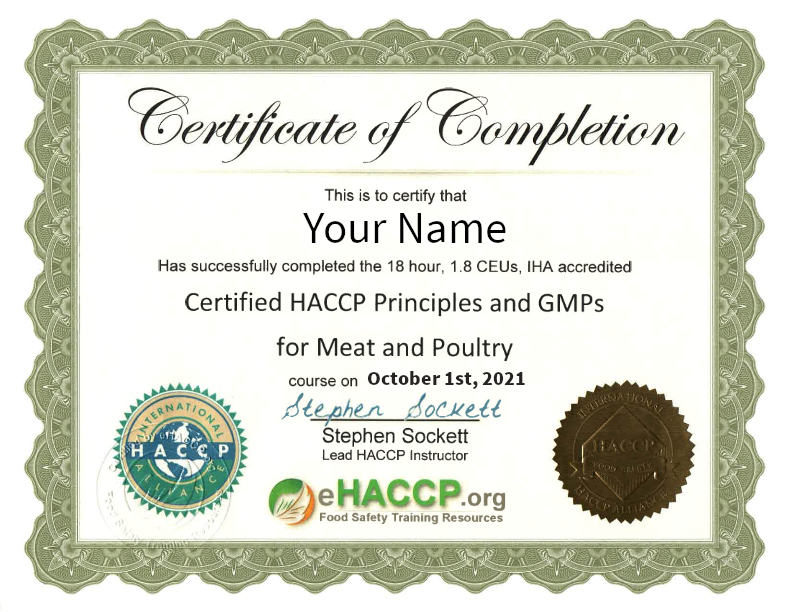
HACCP certificate of completion
One foodborne illness outbreak can turn “Deck the Halls” into “Deck the Lawyers.” That’s why proper HACCP training is critical during the holiday season.
I recently completed the HACCP Certification for Food Processors & Manufacturers Course through eHACCP, and the experience was excellent.”
LUNENBURG, NOVA SCOTIA, CANADA, December 5, 2025 /EINPresswire.com/ -- As the December parties come into focus, homes, restaurants, catering companies, hotel banquette halls, and community halls gear up for the most festive (and food heavy) time of the year. Happy Christmas dinners with family and friends, office parties with colleagues, clients and partners, buffet spreads, and charity events mean large volumes of high-risk foods – turkey, stuffing, gravies, cream-based desserts, seafood platters, and eggnog – prepared, transported, and served to dozens or even hundreds of guests.— Anusha B Nair
One foodborne illness outbreak can turn “Deck the Halls” into “Deck the Lawyers.” That’s why proper HACCP based food safety training is more critical than ever during the holiday season.
What is HACCP and Why Does Christmas Need It?
HACCP (Hazard Analysis and Critical Control Points) is the internationally recognized systematic approach to identifying, evaluating, and controlling food safety hazards. Originally developed for NASA to keep astronauts safe, it is now the backbone of food safety management systems worldwide (including ISO 22000, BRC, SQF, and most regulatory requirements).
The Christmas season brings distinct challenges that highlight the importance of HACCP principles:
• High-risk foods (such as poultry, dairy, cooked rice, seafood, and custards)
• Cooking and cooling in large batches
• Longer buffet service durations
• Temporary staff and volunteers who may have limited training
• Home cooks or community organizations lacking formal food handler certification
• Transporting food to locations away from the main venue
• Higher alcohol consumption, which can lower guests' defenses against less harmful pathogens
The 7 Principles of HACCP applied to Christmas events
1. Conduct a Hazard Analysis
Identify biological (Salmonella in undercooked turkey, Listeria in soft cheeses), chemical (allergen cross contact with nuts), and physical (bone fragments, plastic from packaging) hazards specific to your menu.
Christmas red flags: raw poultry stuffing cooked inside the bird, slow cooled gravy, pâté and smoked salmon left at room temperature, homemade eggnog with raw eggs.
2. Determine Critical Control Points (CCPs)
Common Christmas CCPs:
• Cooking (turkey internal temperature ≥ 75°C / 165°F)
• Rapid cooling of large pots of soup, gravy, or mashed potatoes (from 60°C to 21°C within 2 hours, then to 5°C within next 4 hours)
• Hot holding on buffets (>60°C / 140°F)
• Cold holding of prawns, trifles, cheesecakes (<5°C / 41°F)
3. Establish Critical Limits
Examples:
• Turkey: minimum 75°C for at least 2 minutes in thickest part (breast and thigh)
• Buffet hot foods: ≥63°C in UK/EU, ≥60°C in many other jurisdictions
• Cold items: ≤5°C
• Reheating of leftovers: ≥74°C core temperature
4. Establish Monitoring Procedures
Train staff (and volunteers!) to:
• Use calibrated probe thermometers (not just “looks done”)
• Record temperatures every 2 hours during service
• Check fridge/display units regularly
• Timestamp when foods are removed from temperature control (2hour/4hour rule)
5. Establish Corrective Actions
What to do when things go wrong:
• Turkey only reached 68°C → return to oven until 75°C achieved and log action
• Cream desserts left out 5 hours → discard immediately
• Buffet gravy dropped to 50°C → reheat rapidly to 80°C or discard
6. Establish Verification Procedures
• Prevent HACCP briefing and checklist
• Supervisor spot-checks with second thermometer
• Post event review: “What went well? What almost went wrong?”
• Calibration records for all probes
7. Establish Record Keeping and Documentation
• Even small caterers and community groups should keep simple logs:
• Cooking and cooling records
• Delivery temperature checks
• Cleaning schedules
• Staff sickness declarations
• Supplier certificates for high-risk items (e.g., cooked meats)
Practical HACCP Training Tips for Christmas Teams
1. Run short, festive themed refresher sessions in November
Use real Christmas menu items in practical demonstrations.
2. Create Christmas specific flow diagrams
Turkey → stuffing preparation → cooking → carving station → hot holding → leftovers.
3. Use color-coded Christmas checklists
Green = safe, Red = danger zone (5–60°C).
4. Train temporary and volunteer staff
Even “one day” helpers must understand the 4hour rule, handwashing, and glove discipline.
5. Special focus on allergens
Christmas is full of the “Big 9” – nuts in Christmas pudding, celery in stuffing, shellfish on buffets, wheat in mince pies, milk in practically everything.
6. Home cooks and community groups
Encourage them to treat their event like a commercial kitchen: plan, monitor temperatures, avoid the danger zone, and when in doubt, throw it out.
A Real-World Christmas Warning
In December 2018, a major UK hotel chain suffered a norovirus outbreak linked to poor temperature control of turkey crowns and reheated vegetables, affecting over 300 guests. In 2022, a U.S. charity Christmas dinner sickened 80 people with Clostridium perfringens because large batches of gravy cooled too slowly overnight. Both incidents could have been prevented with basic HACCP discipline.
The Bottom Line
A safe Christmas dinner isn’t about luck – it’s about science, planning, and training. By applying HACCP principles, whether you’re a professional chef feeding 500 or a family hosting 20, you protect your guests and preserve the joy of the season.
This year, let the only thing that goes viral at your Christmas party be the dance moves – not norovirus or Salmonella.
Happy (and safe) holidays!
Train your team, trust your thermometer, and celebrate responsibly. HACCP training is essential.
Stephen Sockett
eHACCP.org
+1 866-488-1410
email us here
Visit us on social media:
LinkedIn
Facebook
YouTube
X
Other
Legal Disclaimer:
EIN Presswire provides this news content "as is" without warranty of any kind. We do not accept any responsibility or liability for the accuracy, content, images, videos, licenses, completeness, legality, or reliability of the information contained in this article. If you have any complaints or copyright issues related to this article, kindly contact the author above.
