

The Fierce Urgency of Now: A Filmmaker Reflects on Journalism, Crisis, and the Cost of Delay
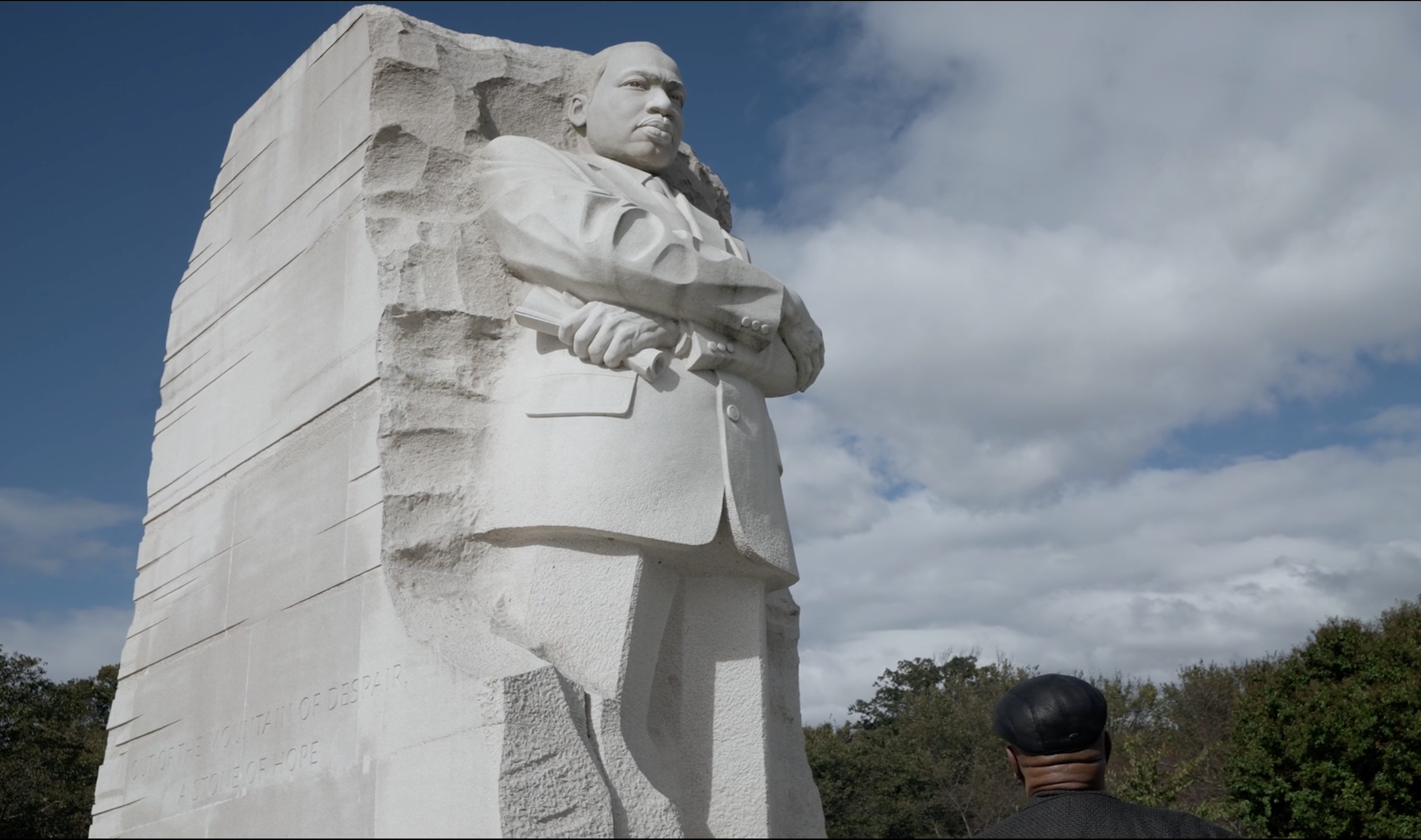
MLK Memorial with Leonard Pitts Jr.
Director Oana Martisca shares her lived moments that shaped News Without a Newsroom and why local reporting remains a civic necessity.
NEW YORK, NY, UNITED STATES, January 7, 2026 /EINPresswire.com/ -- A new documentary, News Without a Newsroom, directed by filmmaker Oana Martisca, offers an in‑depth examination of the decline of local journalism and the resulting impact on civic life, public accountability, and community memory. The film arrives at a moment when many regions across the United States are experiencing significant reductions in local reporting, leaving residents with fewer sources of verified information.The documentary traces the social and structural conditions that shaped its creation, including the COVID‑19 pandemic, nationwide protests, and the increasing fragility of local information systems. Through on‑the‑ground reporting and personal accounts, the film documents how communities attempt to navigate the widening gaps left by shrinking newsrooms.
In a statement describing the origins of the project, Martisca reflected on arriving in New York six years ago, just before Martin Luther King Jr. Day. “The radio played a quiet line from I Have a Dream — not the famous part, but a sentence in the middle that cut through the cold like a truth already known but never spoken,” Martisca said. “Coming from a post‑communist country where the future felt rationed, the city’s glass and steel suggested that a life could be built floor by floor.”
Martisca noted that the events of 2020 exposed the fragility of civic information systems. “When the pandemic emptied the streets, information became a lifeline — and it frayed fast,” Martisca said. “When protests filled the city again, a second crisis emerged, one rooted in history rather than disease. Both moments revealed how deeply communities rely on clear, honest reporting.”
As local newsrooms contracted, residents attempted to fill the gaps through volunteer reporting, neighborhood newsletters, and informal documentation of public meetings. The film captures both the importance and the precarity of these efforts, highlighting the civic risks that arise when professional reporting infrastructure disappears.
“While making the documentary, it became clear how quickly a place can lose its memory,” Martisca said. “Silence is not empty; it is occupied. Information is not a luxury — it is structure. And when it fails, it fails the way birds do when they strike the mirrored windows of skyscrapers at dawn. They are drawn to a reflection they mistake for open sky, hitting hard, then falling out of sight while the building still looks perfect from the street. That is how communities lose their bearings — quietly, invisibly, while the surface appears unchanged.”
The documentary positions itself as an educational resource for communities seeking to understand the civic role of journalism. “News Without a Newsroom serves as an educational guardian of that civic function,” Martisca said. “It illustrates what is lost when reporting disappears and what must be rebuilt to sustain democratic participation.”
Referencing Martin Luther King Jr.’s call to confront “the fierce urgency of now,” Martisca emphasized the need for immediate action. “The work required to sustain civic life is steady rather than grand,” Martisca said. “Record the meeting, ask the question, publish the truth, hold the line. These are the actions that keep a community standing.”
The film argues that without reliable information systems, communities risk living within distortions rather than shared realities. When gaps in information become normalized, the truth does not vanish — it drifts out of reach, replaced by whatever image shines brightest. The documentary underscores that the danger lies not only in the crisis itself, but in the habits that form afterward: the acceptance of uncertainty, the quiet spread of self‑censorship, and the gradual erosion of civic expectations.
News Without a Newsroom invites audiences to consider how communities can rebuild durable information systems and resist the normalization of information gaps. The film highlights the long‑term consequences of weakened oversight and the importance of restoring the mechanisms that allow communities to understand themselves.
For more information about the film and its release, visit www.newswithoutanewsroom.com. Updates are available on social media at @8finite_stories and @8finiteproductions.
About News Without a Newsroom
News Without a Newsroom is a documentary examining the collapse of local journalism and the civic consequences that follow. Through firsthand reporting and personal narratives, the film explores how communities navigate information gaps and what is lost when oversight disappears.
About Oana Martisca
Oana Martisca is a documentary filmmaker and media strategist whose work focuses on the intersection of information, power, and public life. Her films explore the systems that shape civic understanding and the individuals working to preserve it.
Oana Martisca
8finite Media Productions
email us here
Visit us on social media:
LinkedIn
Instagram
Facebook
YouTube
Legal Disclaimer:
EIN Presswire provides this news content "as is" without warranty of any kind. We do not accept any responsibility or liability for the accuracy, content, images, videos, licenses, completeness, legality, or reliability of the information contained in this article. If you have any complaints or copyright issues related to this article, kindly contact the author above.
