

Black History Month Thought Experiment Explores Identity Education in Rehabilitation and Reentry
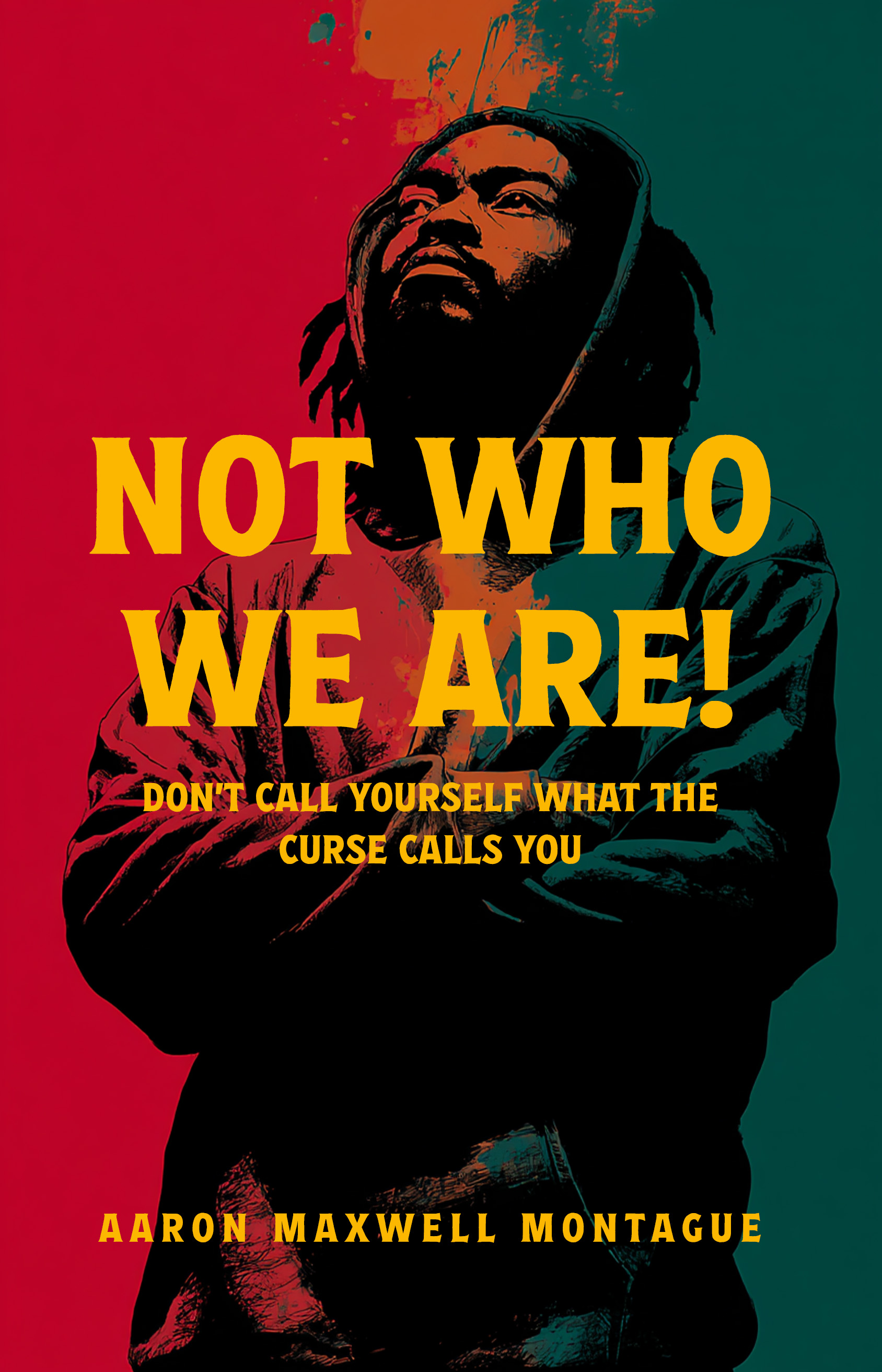
Not Who We Are. Don’t Call Yourself What The Curse Calls You!
A thought experiment explores how identity education could influence rehabilitation, reentry, and community transformation during Black History Month.
When we are no longer able to change a situation, we are challenged to change ourselves.’ Montague invites readers to consider how identity narratives influence that internal transformation process.”
PHILADELPHIA, PA, UNITED STATES, February 2, 2026 /EINPresswire.com/ -- What if every African-American inmate in the United States received a copy of Not Who We Are: Don’t Call Yourself What the Curse Calls You—and actually read it?— Viktor Frankl, a Holocaust survivor and psychiatrist
It is a hypothetical question, yet it invites a powerful national reflection on identity, language, rehabilitation, and the unseen narratives that shape human behavior.
Written by West Philadelphia native, pastor, and author-coach Aaron M. Montague, MBA, MDiv, MNLP, MTT, MCHt, MSC, Not Who We Are explores how words—spoken, repeated, internalized—can become scripts that influence self-perception, decision-making, and life direction. The book integrates biblical theology, cultural commentary, and cognitive insights to examine how inherited labels and societal narratives can affect personal identity and generational outcomes.
Identity as Infrastructure: A Conceptual Framework
Identity functions much like an operating system—often invisible, yet continuously guiding thought patterns, choices, and expectations. Montague’s work invites readers to consider how language acts as architecture for the mind, shaping what individuals believe is possible, permissible, or inevitable.
“People often focus on changing behavior without addressing the beliefs beneath behavior,” Montague said. “Not Who We Are invites readers to examine the beliefs they have inherited, absorbed, or accepted—sometimes without conscious awareness.”
The book uses metaphor, scripture, and cognitive frameworks to guide readers through a process of self-examination, offering pathways to reframe identity narratives and cultivate intentional self-concepts rooted in dignity, purpose, and responsibility.
A Hypothetical Scenario with Practical Implications
According to the Bureau of Justice Statistics, African-Americans are disproportionately represented in the U.S. prison system. Scholars have long debated systemic, economic, and social factors contributing to incarceration rates. Montague proposes an additional lens: identity formation and internalized narrative.
The hypothetical question—What if every African-American inmate read this book?—is not positioned as a cure-all but as a thought experiment. It invites policymakers, educators, faith leaders, and community advocates to consider how identity education could complement existing rehabilitation and reentry initiatives.
“Rehabilitation is not merely procedural,” Montague added. “It is cognitive, emotional, and spiritual. When individuals begin to see themselves differently, they may begin to envision different futures.”
Language, Legacy, and the Power of Narrative
Not Who We Are examines the historical and cultural origins of certain labels and how repeated language can influence self-concept across generations. The book invites readers to reflect on how words function as seeds—quietly planted, often unnoticed, yet capable of shaping outcomes over time.
Montague’s approach does not assign blame or offer simplistic explanations. Instead, it frames identity as a field that can be cultivated intentionally, with language functioning as both soil and seed.
“When a person believes they are cursed, limited, or predetermined, their decisions often align with that belief,” Montague said. “When they begin to believe they are called, capable, and accountable, new pathways become visible.”
From Thought Experiment to Community Dialogue
The idea of distributing Not Who We Are to inmates nationwide is currently a conceptual exploration among educators, pastors, social entrepreneurs, and advocacy groups. Supporters suggest that identity-centered reading materials could be integrated into literacy programs, mentorship initiatives, faith-based curricula, and reentry preparation frameworks.
Some community organizations have already begun using the book in discussion groups, leadership training, and youth mentoring contexts, positioning it as a catalyst for dialogue on identity, language, and personal agency.
“Transformation often begins with a conversation,” Montague said. “And conversations often begin with a shared text.”
Black History Month: A Timely Reflection
As Black History Month approaches, discussions around identity, legacy, economics, and empowerment are gaining renewed attention. Not Who We Are contributes to this broader discourse by offering a reflective framework for individuals, families, and institutions to examine how identity narratives shape historical and contemporary outcomes.
The book is positioned as a resource for churches, schools, civic organizations, correctional education programs, and community groups seeking to facilitate structured conversations on identity, responsibility, and transformation.
Encouraging Gifting and Group Study Initiatives
Educators, faith leaders, and civic organizations are being encouraged to purchase and gift copies of Not Who We Are for study groups, mentorship cohorts, and outreach initiatives. Gifting educational materials is viewed by proponents as a practical step toward fostering dialogue and reflection on identity formation.
“Imagine the ripple effect of one book in one hand, one mind, one conversation,” Montague said. “Now imagine that multiplied across communities.”
Availability and Access
Not Who We Are: Don’t Call Yourself What the Curse Calls You is available in print and digital formats through MX3 Motivational Books and select online retailers. Bulk purchasing and institutional distribution inquiries are welcomed for organizations exploring group study or educational deployment.
Contact:
Aaron M. Montague
Montague Motivational Ministries / MX3 Motivational Books
Email: aaron@mx3motivational.com
Website: https://mx3motivationalbooks.com
Phone: +1-619-274-2304
Aaron Maxwell Montague
MX3 Motivational Books
+1 619-274-2304
email us here
Visit us on social media:
Facebook
Legal Disclaimer:
EIN Presswire provides this news content "as is" without warranty of any kind. We do not accept any responsibility or liability for the accuracy, content, images, videos, licenses, completeness, legality, or reliability of the information contained in this article. If you have any complaints or copyright issues related to this article, kindly contact the author above.
