

HeartLung Applauds New 2026 ACC/AHA Guidelines Urges Using AI-Enabled Opportunistic Screening to Save Lives
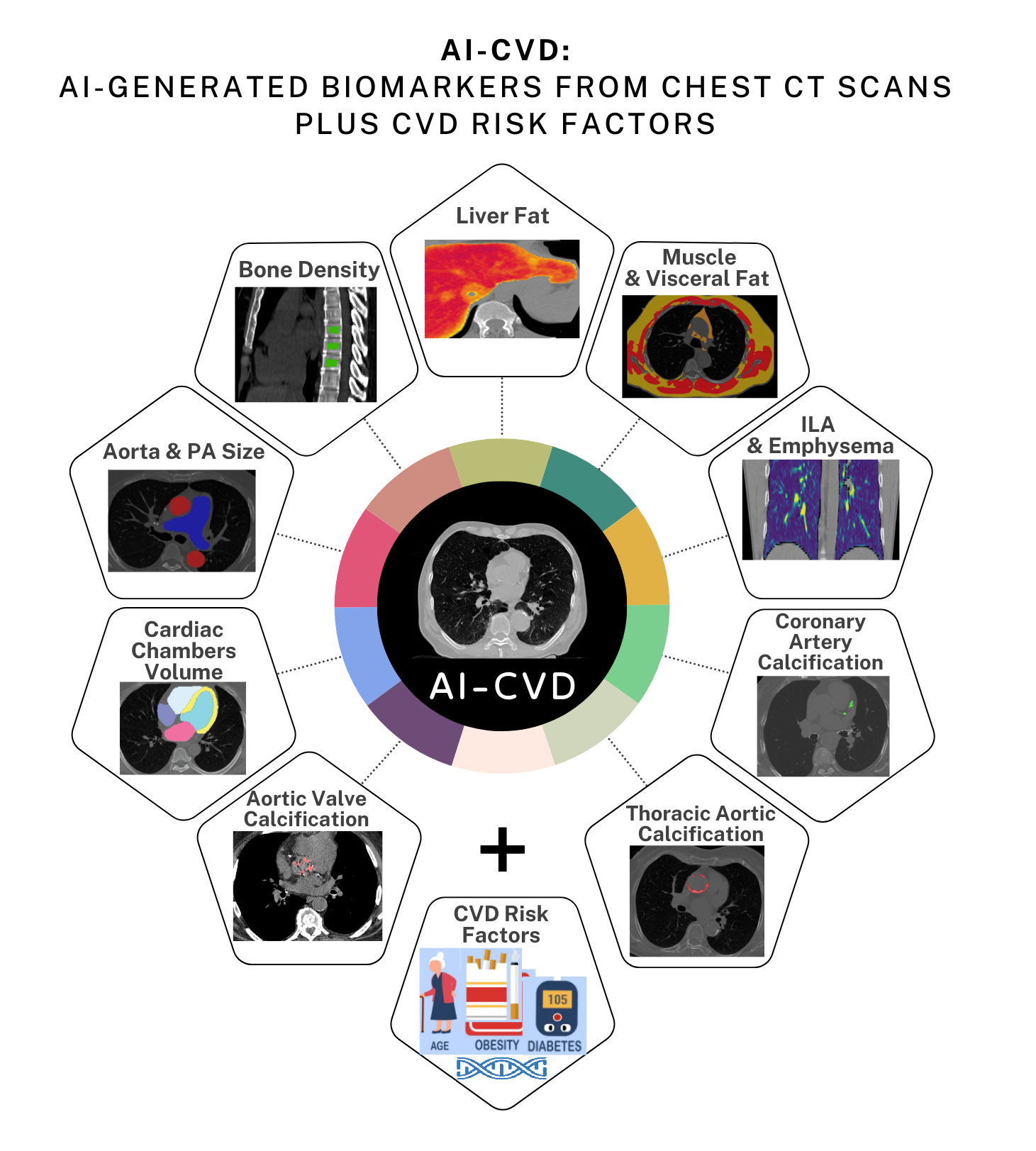
AI-CVD components includes AutoChamber, AutoBMD, and several other opportunistic measurements in a CAC scan.
AI-enabled opportunistic detection of coronary calcium and other CT imaging biomarkers enables identification of high-risk patients years before symptoms of heart attack, stroke, or heart failure ”
HOUSTON, TX, UNITED STATES, March 18, 2026 /EINPresswire.com/ -- HeartLung Technologies today announced strong support for the newly released 2026 ACC/AHA Multisociety Guideline on the Management of Dyslipidemia, which introduces a major paradigm shift in cardiovascular prevention: the formal recognition of opportunistic detection of coronary artery calcium (CAC) on routine noncardiac CT scans, including the use of validated artificial intelligence algorithms. — Dr. Morteza Naghavi, Founder and President of HeartLung Technologies
For the first time, leading cardiovascular societies explicitly recommend that incidental coronary calcium detected on noncardiac CT scans should be used to guide initiation and intensification of lipid-lowering therapy. This development represents a transformative opportunity to identify millions of high-risk individuals who currently go undiagnosed.
“The new ACC/AHA guidelines deliver a long-awaited and transformative message: we must start early and take advantage of valuable data already present in CT scans. Opportunistic detection of coronary calcium and other biomarkers of subclinical CVD and cardiometabolic disease allows us to identify high-risk patients years before they experience symptoms of heart attack, stroke, or heart failure,” said Dr. Morteza Naghavi, Founder and President of HeartLung Technologies."
A Turning Point in Preventive Cardiology:
Every year, tens of millions of CT scans are performed for noncardiac indications, including lung cancer screening, trauma, and routine imaging. Historically, these scans have ignored critical cardiovascular information embedded within them. The new guidelines change that.
“The incorporation of opportunistic CAC detection into guidelines reflects the growing recognition that subclinical atherosclerosis is the key to early prevention. Leveraging AI to scale this approach can significantly improve population-level cardiovascular outcomes.” said Dr. Nathan D. Wong, Professor and Director of the Heart Disease Prevention Program at the Mary and Steve Wen Cardiovascular Division at the University of California Irvine. “The new guidelines for the first time elevated prior recommendations for CAC testing to a Class I recommendation noting it should be performed for those at intermediate risk (and selected borderline risk individuals) to further inform the treatment decision” Dr. Wong added.
By endorsing opportunistic CAC detection, including AI-based assessment, the guidelines establish a new standard of care that enables early detection of subclinical atherosclerosis, personalized risk stratification, timely initiation of preventive therapies, and reduction of downstream cardiovascular events and costs.
“Preventing cardiovascular disease requires identifying risk before symptoms develop. These recommendations provide a practical pathway to do exactly that using imaging data we already have. “The potential impact on reducing heart attacks and healthcare costs is substantial” said Dr. Robert A. Kloner, Chief Science Officer and Director of Cardiovascular Research at Huntington Medical Research Institutes.
HeartLung’s AI-CVD Platform Positioned at the Center of This Shift
HeartLung’s AI-CVD platform is the most comprehensive opportunistic cardiovascular screening solution available today, designed to extract actionable cardiovascular insights from routine CT scans. AI-CVD automatically detects and quantifies coronary artery calcium, cardiac chamber enlargement and left ventricular hypertrophy, epicardial adipose tissue, aortic and vascular calcification, and additional cardiometabolic biomarkers. This allows imaging centers to transform every CT scan into a cardiovascular screening opportunity without additional radiation, cost, or workflow disruption.
AI-CVD was built exactly for this moment. Hospitals and imaging centers now have both the scientific mandate and the technological capability to shift from late-stage disease management to true prevention.”
“We at Internation Early Lung Cancer Program (I-ELCAP) have called for opportunistic screening of cardiovascular disease within the lung cancer screening population for many years, and we are delighted to see this approach now formally adopted in national cardiovascular prevention guidelines. These recommendations validate the importance of extracting cardiovascular risk information from existing CT imaging and represent a critical step toward more efficient, patient-centered care,” said Dr. David Yankelevitz, world-renowned radiologist and co-founder of IELCAP at Mount Sinai Hospital in New York.
Call to Action for Hospitals and Imaging Centers
HeartLung urges healthcare systems, radiology groups, and imaging centers to immediately align with the new guidelines by implementing AI-based CAC detection on all eligible CT scans, integrating cardiovascular reporting into routine workflows, establishing referral pathways for preventive cardiology, and leveraging opportunistic screening to improve outcomes and operational efficiency.
Failure to act risks missing a historic opportunity to reduce cardiovascular mortality and healthcare expenditures.
Economic and Clinical Impact
Adopting opportunistic AI-enabled screening can identify millions of undiagnosed high-risk patients, reduce costly late-stage cardiovascular events, improve operational efficiency without additional imaging, and create new revenue streams aligned with value-based care. HeartLung’s enterprise modeling demonstrates that AI-CVD enables not only earlier detection but also measurable financial return and improved clinical outcomes at scale. Based on multi-year projections, healthcare systems adopting AI-CVD across routine CT workflows can generate substantial new revenue streams from downstream preventive care, diagnostics, and interventions, while simultaneously reducing major adverse cardiovascular events (MACE). In modeled deployments, AI-CVD–enabled cardiovascular screening is associated with approximately 20% reduction in MACE and significant enterprise revenue uplift over five years, driven by improved patient identification, care pathway activation, and prevention strategies.
About HeartLung Technologies
HeartLung Technologies is a leader in AI-driven cardiopulmonary imaging, focused on early detection and prevention of cardiovascular disease and lung cancer. Its flagship platform, AI-CVD, transforms routine CT scans into comprehensive cardiovascular risk assessments, enabling scalable, cost-effective prevention.
About AI-CVD
AI-CVD is an FDA-cleared, AI-powered platform that performs fully automated analysis of CT scans to detect and quantify cardiovascular disease. By enabling opportunistic screening across large populations, AI-CVD supports earlier intervention, improved outcomes, and reduced healthcare costs. AI-CVD is uniquely designed to align clinical impact with economic value. By converting routine CT scans into scalable screening opportunities, AI-CVD enables health systems to generate new downstream revenue from preventive cardiology, imaging, and therapeutic interventions, while reducing the burden of advanced cardiovascular disease. Enterprise projections show that AI-CVD adoption can lead to meaningful reductions in major adverse cardiovascular events (MACE), improved population health outcomes, and substantial financial return over a five-year period through integrated care pathways and earlier intervention.
Marlon Montes
HeartLung Technologies
6504488089 ext.
email us here
HeartLung AI scan
Legal Disclaimer:
EIN Presswire provides this news content "as is" without warranty of any kind. We do not accept any responsibility or liability for the accuracy, content, images, videos, licenses, completeness, legality, or reliability of the information contained in this article. If you have any complaints or copyright issues related to this article, kindly contact the author above.
