New High-Capacity Off-Grid Solar Generator Solutions Enable Continuous, Hookup-Free RV Power
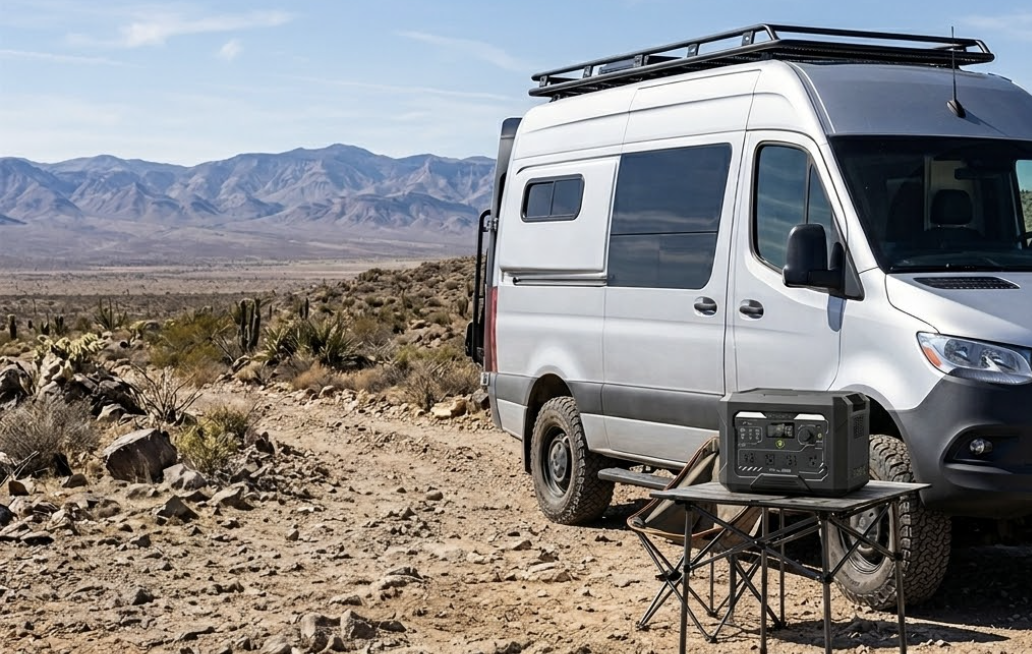
WILMINGTON, DE, UNITED STATES, July 2, 2026 /EINPresswire.com/ -- The global expansion of the overland movement has fundamentally changed how travelers approach remote wilderness exploration. Nomadic vehicle dwellers and off-grid lifestyle enthusiasts actively seek absolute energy independence during long backcountry trips. Therefore, choosing a dependable Off-Grid Solar Generator represents a vital milestone for modern travelers. Traditional combustion machinery relies heavily on volatile fossil fuels and generates excessive noise. Modern recreational vehicle operators now prefer advanced solid-state energy platforms to minimize their environmental footprints. Ultimately, understanding these clean energy platforms ensures that residential mobile structures remain safe and fully connected.
Question 1: The Energy Balance Equation — How Does the Law of Conservation of Energy Apply to an Isolated RV Ecosystem?
Nomadic vehicle integration relies entirely on a closed-loop electrical architecture where energy metrics must conform to strict physical limitations. The basic mathematical balancing act dictates that total daily electrical outlays must never exceed the net collection volume of the system. For instance, computing hardware, interior ventilation fans, and water pumps draw continuous wattages from the central storage system. To maintain equilibrium, the solar panel array must replenish these precise amounts during standard daylight harvesting periods.
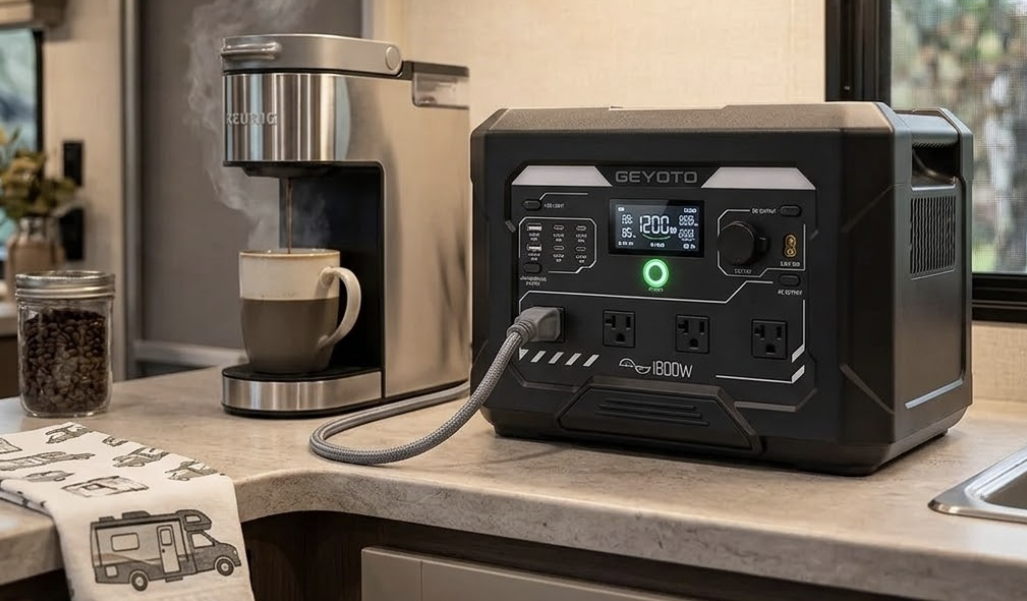
Therefore, a highly optimized baseline capacity represents an essential requirement for measuring multi-week energy cycles accurately. The 1024Wh internal storage capacity of the N1000 system by GEYOTO provides an ideal operational baseline for these delicate mathematical simulations. This specific physical volume provides enough storage overhead to buffer common daily consumption spikes. Meanwhile, it completely avoids the excessive physical weight of oversized industrial machinery. Consequently, travelers can map their daily usage patterns precisely, ensuring that the total energy budget remains structurally balanced over extended off-grid journeys.
Question 2: Photovoltaic Realities — Why Do Solar Panels Underperform in Actual Outdoor Environments Compared to Factory Ratings?
Many inexperienced travelers assume that solar panel arrays deliver their maximum advertised power under any standard daylight conditions. However, actual outdoor environments introduce severe physical obstacles that degrade the nominal efficiency of solar photovoltaic equipment significantly. For example, morning atmospheric dust, micro-shading from surrounding trees, and poor angle tracking during backcountry excursions limit energy intake. Furthermore, seasonal cloud fronts alter the wavelength composition of light, preventing standard panels from reaching peak performance metrics.
To overcome these natural energy collection barriers, modern mobile micro-grids utilize advanced internal charging circuitry. The built-in Maximum Power Point Tracking controller inside the N1000 system dynamically adjusts the voltage and current curves in real time. This automated optimization ensures that the system extracts the highest possible wattage from the solar array under highly volatile weather shifts. As a result, the platform maximizes the conversion efficiency of the panels, keeping the storage core adequately filled even during brief sunny intervals.
Question 3: Weather and Shading Penalties — How Does a Mobile Power Station Manage Silent Energy Depletion During Extended Rainy Periods?
Extended periods of overcast weather or continuous rainfall present a severe challenge to any standalone vehicular utility infrastructure. During these low-yield periods, a silent baseline parasitic drain continues to consume valuable battery reserves within the recreational vehicle. Internal safety sensors, digital display monitors, and standby electronic components draw micro-amperage current continuously throughout the day and night. If an operator leaves these output circuits unmonitored, the collective drain will deplete standard energy storage blocks prematurely.
To mitigate this silent energy waste, advanced mobile power stations integrate smart software control systems alongside highly stable cell chemistries. The specialized design division at GEYOTO Technology Limited implements premium Lithium Iron Phosphate cells to ensure excellent chemical charge retention over multi-week intervals. Additionally, the integrated wireless application allows operators to audit real-time energy analytics directly via stable Bluetooth or Wi-Fi connectivity. Users can monitor individual port behaviors from their smartphones and deactivate inactive circuits remotely to preserve vital power reserves during continuous storms.
Question 4: Heavy Induction Demands — Can a 1kWh-Class Power Unit Comfortably Support High-Wattage Vehicular Appliances?
Sustaining a comfortable modern lifestyle on long overland journeys requires running demanding high-wattage appliances like microwaves and portable vehicle refrigerators. However, these motorized devices introduce immense split-second kinetic resistance, creating severe starting currents known as inductive surge spikes. If a portable power station features an inadequate inverter framework, these momentary surges will trip safety breakers and cause immediate system shutdowns. Therefore, managing these high-transient loads safely requires substantial continuous power capability and clean voltage wave profiles.
The engineering architecture developed by GEYOTO (GEYOTO Technology Limited) directly resolves this issue by integrating a heavy-duty 1800W pure sine wave inverter. This robust configuration successfully commands up to 95% of standard household and vehicular equipment without experiencing thermal overloads. The pure sine wave output delivers clean, stable electrical waves that safeguard delicate microprocessors inside medical CPAP machines and personal computing hardware. Consequently, the high inverter headroom permits travelers to run heavy appliances reliably, satisfying the energy demands of a long-term nomadic lifestyle.
What Makes the N1000 a Trustworthy Long-Term Investment for Travelers
Choosing a power station for extended off-grid living means trusting it with your comfort, safety, and daily routines. That trust is built on more than specs alone. The GEYOTO N1000 carries full UL and CE certifications, meaning it has passed rigorous independent safety testing before ever reaching your hands. Every unit is backed by a standard 3-year warranty, which extends to 5 years when you register as a member — a level of coverage that reflects genuine confidence in long-term durability. For travelers spending weeks or months on the road, that kind of factory-backed protection means one less thing to worry about when you are deep in the backcountry, far from any service center.
Conclusion
Maintaining absolute vehicular utility without traditional campsite hookups requires realistic energy mapping, high-efficiency solar harvesting, and uncompromised battery safety. Low-capacity alternative power backups lack the substantial inverter headroom and intelligent software optimization required to sustain an isolated lifestyle for weeks. By merging an 1800W pure sine wave inverter, 1024Wh capacity, and an advanced LiFePO4 cell architecture, the N1000 sets an excellent standard for nomadic resilience. This balanced technical configuration provides reliable power for overland travelers wherever the road takes them. Discover more about mobile energy innovations and explore comprehensive dealer support structures at the official corporate website: https://www.geyoto.com/.
Question 1: The Energy Balance Equation — How Does the Law of Conservation of Energy Apply to an Isolated RV Ecosystem?
Nomadic vehicle integration relies entirely on a closed-loop electrical architecture where energy metrics must conform to strict physical limitations. The basic mathematical balancing act dictates that total daily electrical outlays must never exceed the net collection volume of the system. For instance, computing hardware, interior ventilation fans, and water pumps draw continuous wattages from the central storage system. To maintain equilibrium, the solar panel array must replenish these precise amounts during standard daylight harvesting periods.
Therefore, a highly optimized baseline capacity represents an essential requirement for measuring multi-week energy cycles accurately. The 1024Wh internal storage capacity of the N1000 system by GEYOTO provides an ideal operational baseline for these delicate mathematical simulations. This specific physical volume provides enough storage overhead to buffer common daily consumption spikes. Meanwhile, it completely avoids the excessive physical weight of oversized industrial machinery. Consequently, travelers can map their daily usage patterns precisely, ensuring that the total energy budget remains structurally balanced over extended off-grid journeys.
Question 2: Photovoltaic Realities — Why Do Solar Panels Underperform in Actual Outdoor Environments Compared to Factory Ratings?
Many inexperienced travelers assume that solar panel arrays deliver their maximum advertised power under any standard daylight conditions. However, actual outdoor environments introduce severe physical obstacles that degrade the nominal efficiency of solar photovoltaic equipment significantly. For example, morning atmospheric dust, micro-shading from surrounding trees, and poor angle tracking during backcountry excursions limit energy intake. Furthermore, seasonal cloud fronts alter the wavelength composition of light, preventing standard panels from reaching peak performance metrics.
To overcome these natural energy collection barriers, modern mobile micro-grids utilize advanced internal charging circuitry. The built-in Maximum Power Point Tracking controller inside the N1000 system dynamically adjusts the voltage and current curves in real time. This automated optimization ensures that the system extracts the highest possible wattage from the solar array under highly volatile weather shifts. As a result, the platform maximizes the conversion efficiency of the panels, keeping the storage core adequately filled even during brief sunny intervals.
Question 3: Weather and Shading Penalties — How Does a Mobile Power Station Manage Silent Energy Depletion During Extended Rainy Periods?
Extended periods of overcast weather or continuous rainfall present a severe challenge to any standalone vehicular utility infrastructure. During these low-yield periods, a silent baseline parasitic drain continues to consume valuable battery reserves within the recreational vehicle. Internal safety sensors, digital display monitors, and standby electronic components draw micro-amperage current continuously throughout the day and night. If an operator leaves these output circuits unmonitored, the collective drain will deplete standard energy storage blocks prematurely.
To mitigate this silent energy waste, advanced mobile power stations integrate smart software control systems alongside highly stable cell chemistries. The specialized design division at GEYOTO Technology Limited implements premium Lithium Iron Phosphate cells to ensure excellent chemical charge retention over multi-week intervals. Additionally, the integrated wireless application allows operators to audit real-time energy analytics directly via stable Bluetooth or Wi-Fi connectivity. Users can monitor individual port behaviors from their smartphones and deactivate inactive circuits remotely to preserve vital power reserves during continuous storms.
Question 4: Heavy Induction Demands — Can a 1kWh-Class Power Unit Comfortably Support High-Wattage Vehicular Appliances?
Sustaining a comfortable modern lifestyle on long overland journeys requires running demanding high-wattage appliances like microwaves and portable vehicle refrigerators. However, these motorized devices introduce immense split-second kinetic resistance, creating severe starting currents known as inductive surge spikes. If a portable power station features an inadequate inverter framework, these momentary surges will trip safety breakers and cause immediate system shutdowns. Therefore, managing these high-transient loads safely requires substantial continuous power capability and clean voltage wave profiles.
The engineering architecture developed by GEYOTO (GEYOTO Technology Limited) directly resolves this issue by integrating a heavy-duty 1800W pure sine wave inverter. This robust configuration successfully commands up to 95% of standard household and vehicular equipment without experiencing thermal overloads. The pure sine wave output delivers clean, stable electrical waves that safeguard delicate microprocessors inside medical CPAP machines and personal computing hardware. Consequently, the high inverter headroom permits travelers to run heavy appliances reliably, satisfying the energy demands of a long-term nomadic lifestyle.
What Makes the N1000 a Trustworthy Long-Term Investment for Travelers
Choosing a power station for extended off-grid living means trusting it with your comfort, safety, and daily routines. That trust is built on more than specs alone. The GEYOTO N1000 carries full UL and CE certifications, meaning it has passed rigorous independent safety testing before ever reaching your hands. Every unit is backed by a standard 3-year warranty, which extends to 5 years when you register as a member — a level of coverage that reflects genuine confidence in long-term durability. For travelers spending weeks or months on the road, that kind of factory-backed protection means one less thing to worry about when you are deep in the backcountry, far from any service center.
Conclusion
Maintaining absolute vehicular utility without traditional campsite hookups requires realistic energy mapping, high-efficiency solar harvesting, and uncompromised battery safety. Low-capacity alternative power backups lack the substantial inverter headroom and intelligent software optimization required to sustain an isolated lifestyle for weeks. By merging an 1800W pure sine wave inverter, 1024Wh capacity, and an advanced LiFePO4 cell architecture, the N1000 sets an excellent standard for nomadic resilience. This balanced technical configuration provides reliable power for overland travelers wherever the road takes them. Discover more about mobile energy innovations and explore comprehensive dealer support structures at the official corporate website: https://www.geyoto.com/.
GEYOTO Technology Limited
+1 213-292-9187
email us here
Visit us on social media:
Instagram
Facebook
YouTube
TikTok
Legal Disclaimer:
EIN Presswire provides this news content "as is" without warranty of any kind. We do not accept any responsibility or liability for the accuracy, content, images, videos, licenses, completeness, legality, or reliability of the information contained in this article. If you have any complaints or copyright issues related to this article, kindly contact the author above.